

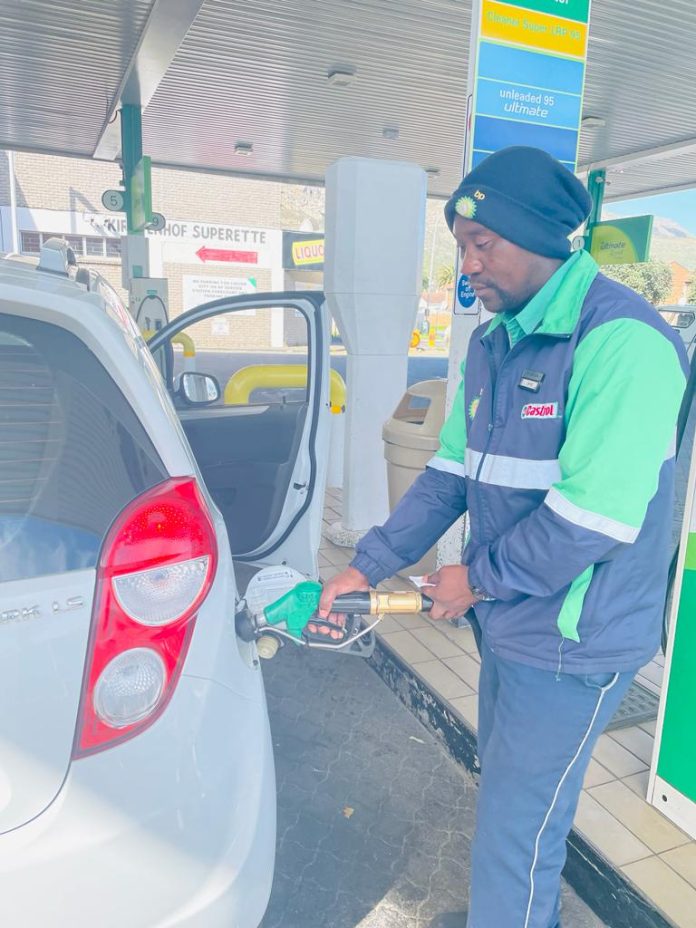
While South Africans have been assured that fuel supply in the country remains stable in the immediate term, a massive fuel price hike for April is unavoidable, as global oil prices spike due to the escalating conflict in the Middle East.
These potentially record-setting fuel price increases for April will have a knock-on effect across the economy, pushing up the cost of transport, food and other essential goods, and placing already strained consumers under further financial pressure.
Consumer Financial Education Specialist at Momentum Group Foundation, Salem Nyati, says consumers need to stress-test their budgets now to avoid financial traps, like additional credit, later.
He shares some practical guidance for consumers:
Rethink affordability
“Consumers must distinguish between bank affordability and real-life affordability. Banks assess based on current income and expenses. But real affordability asks: what happens if fuel, food, or interest rates move against me? If your budget has no breathing room, you’re already overcommitted – even if you’ve been approved. This is not the time to take on new debt to maintain your lifestyle. That includes store accounts, personal loans, or vehicle upgrades. Using credit to absorb rising living costs only creates a delayed, yet deeper crisis.”
Build a ‘shock buffer’ into your budget
“Consumers should actively create margin – even if small. Cut discretionary spend now and redirect that into a buffer. Fuel shocks don’t happen once; they typically come in waves.”
Actively reduce transport costs where possible
“Fuel is now a controllable risk area. Carpooling, consolidating trips, working from home where possible, or even rethinking school and work logistics can make a meaningful difference over a month.”
Stress-test your finances
“A simple exercise: ask yourself: if fuel rises another R2 and food increases 10%, what breaks in my budget? If the answer is ‘I’d need credit,’ you need to adjust now, not later.”
Nyati concludes that this is one of those moments where small financial decisions over the next 2-3 months will determine whether households stay stable or start sliding into debt.
The Executive Head for Personal Lines at Miway Insurance Limited, Sherry Sibeko, has also shared some tips that drivers can take to reduce the impact on their monthly budgets.
“Many people assume that saving fuel requires major lifestyle changes, but small adjustments to everyday driving habits can make a meaningful difference over time.”
Here are her top fuel-saving tips:
Drive smoothly: avoid rapid acceleration and harsh braking – gentle driving uses less fuel.
Keep a steady speed: maintain consistent speeds where possible to improve efficiency.
Don’t idle unnecessarily: switch off your engine if you’re stopped for more than a short time.
Ease into traffic: anticipate stops and slowdowns to reduce constant braking and speeding up.
Use cruise control on highways: it helps maintain a constant speed and lowers fuel use.
Lighten your load: remove unnecessary items and unused roof racks to reduce drag and weight.
Plan your trips: avoid peak traffic and heavy congestion where possible.
Carpool when you can: share trips with colleagues or family to cut overall fuel costs.
Combine errands: group trips together to avoid multiple short drives.