


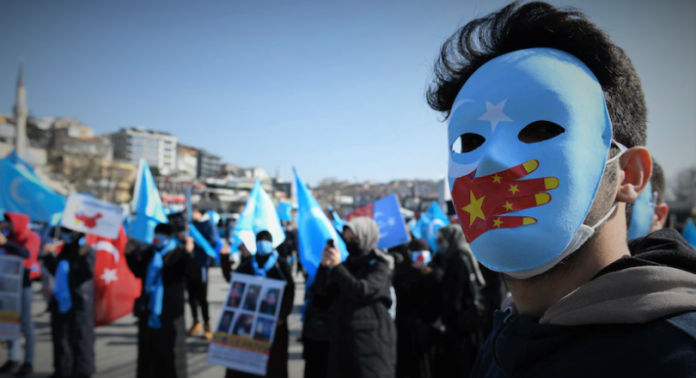
In a recent report to the United Nations General Assembly, an expert on slavery said it was “reasonable to conclude” that forced labour was taking place in China. The report was compiled by Tomoya Obokata, a special rapporteur on contemporary forms of slaves.
- UN special rapporteur says forced labour is enacted on ethnic minorities such as the Uighurs in China
- The report shows that forced labour happens under the region’s vocational skills programme and a poverty assistance programme that transfers surplus labourers to other work
- China has denied allegations of human rights abuse, including genocide
- Uighur support groups and activists welcomed the report, hoping China can be held accountable
My report to #HRC51 on contemporary #slavery affecting #minorities is now available ⬇️https://t.co/jtBCdUz3Yo.
I highlight vulnerabilities & exploitation among #Uyghur, #Yazidi, #Rohingya & #Roma people, #Dalits/#CDWD, people of #AfricanDescent, #migrantworkers & more.
— UN Special Rapporteur Tomoya Obokata (@TomObokata) August 16, 2022
Obokata concluded that there was evidence of forced labour within the far-western region of China, where activists say that more than 1 million ethnic Muslims (Uighurs) are detained in camps. He further added that forced labour existed in the region’s system of skills education and training centres, and a poverty relief programme that involves the transferring of excess rural labourers to other work.
“Further, given the nature and extent of powers exercised over workers during forced labour, including excessive surveillance, abusive living and working conditions, restriction of movement through internment, threats, physical and/or sexual violence, and other inhumane or degrading treatment, some instances may amount to enslavement as a crime against humanity, meriting a further independent analysis,” Al Jazeera reports Obokata said. He notes that while such efforts created a form of employment for ethnic minorities as claimed by the Chinese government, evidence points to the work being of an involuntary nature.
China has since denied allegations of human rights abuses – including genocide – crediting its centres with reducing violent extremism and poverty. Wednesday, last week, the Chinese Foreign Ministry Spokesperson, Wang Wenbin, accused Obokata of spreading disinformation and being a tool for anti-China forces. “We protect the equal right of workers from all ethnic groups to seek employment, to participate in economic and social life, and to share the dividends of socioeconomic progress. Some forces manipulate Xinjiang-related issues and fabricated the disinformation on ‘forced labour in Xinjiang.”
The president of the Uighur Association of Victoria in Melbourne, Australia welcomed the UN report. Alim Osman told Al Jazeera that it is a relief to see the United Nations “finally recognise” the extent of these atrocities. He further added that tangible actions need to hold the Chinese government accountable for its crimes. “We have been telling the world for years that China uses Uighur slavery as an essential tool [that is] enabling China’s economy and making the ongoing Uyghur genocide a profitable venture,” Osman told Al Jazeera.
The rapporteur’s findings come after Canada, the European Union, the United Kingdom and the United States imposed sanctions on people and businesses linked to suspected cases of human rights violations in the region.
#tigray #tigrayfamine
UN Human Rights Council Special Rapporteur Tomoya Obokata: In Ethiopia, minority women in the northern Tigray, Amhara and Afar regions have been subjected to rape, sexual mutilation, and other forms of sexual violence by parties to the conflict. (AP)— Eugen Tomiuc (@Etomiuc) August 18, 2022
Obokata highlighted in his report, the persistence of domestic servitude in the Gulf countries, Colombia and Brazil, and traditional slavery in Mali, Niger and Mauritania. According to End Slavery Now, domestic servitude is the seemingly normal practice of having live-in domestic help, “is used as cover for the exploitation and control of someone, usually from another country”.
Also included in the report are the concerning number of countries that practice forced child marriages, including Somalia, India, Sri Lanka, Vietnam, Bolivia and Honduras to name a few.
READ MORE: