

Cape Town residents have been advised to reduce water use amid recent pressure on the water system.
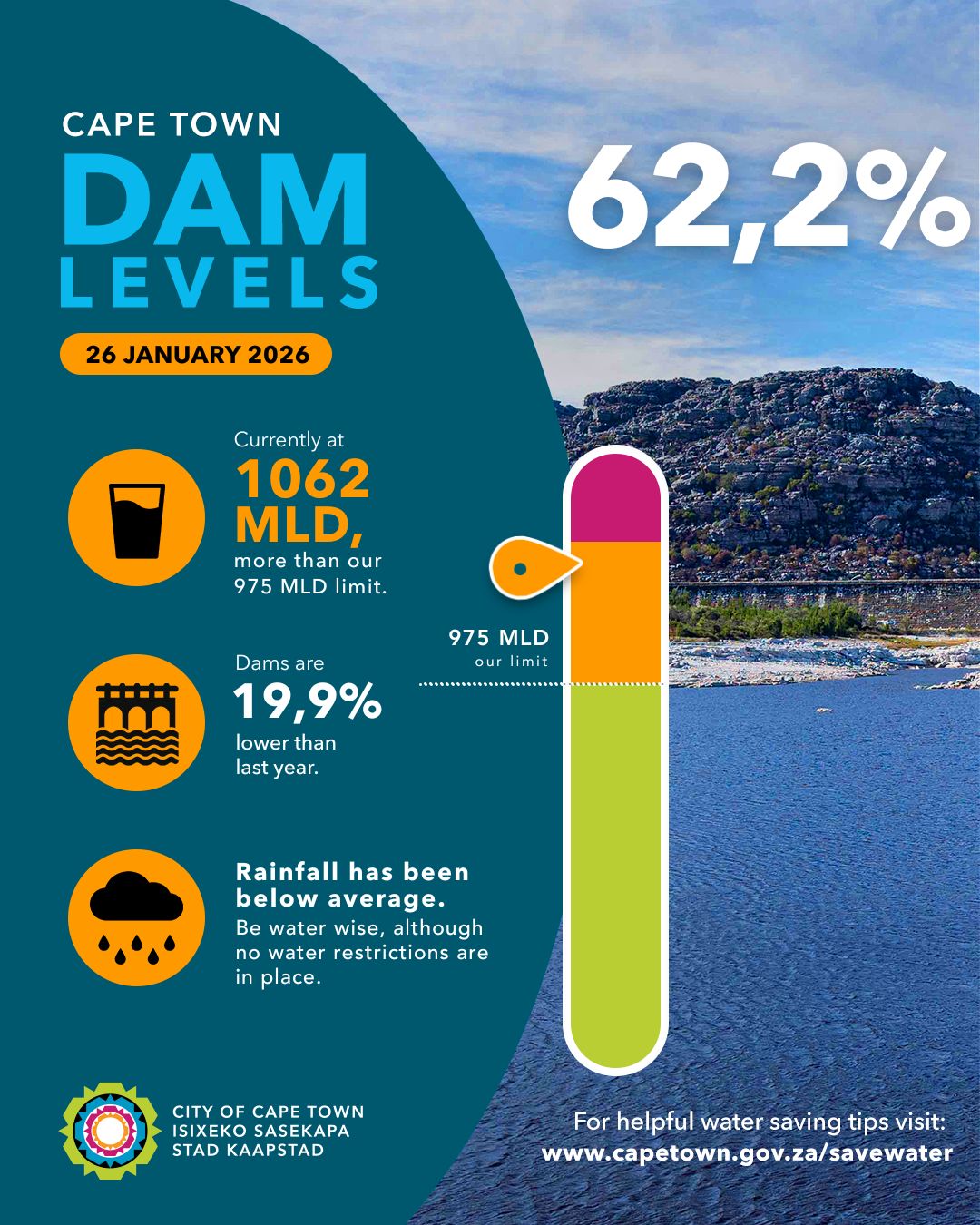
This is because the City of Cape Town revealed that dam levels are nearly 20% lower than what they were at this time last year, with current dam storage levels standing at 62,2%.
The City noted that the current supply must now last until the next rainy season, which usually starts around May.
The municipality’s concern follows a period of reduced inflows into dams throughout 2025, which is the result of lower annual rainfall.
At the same time, water usage has peaked, reaching 1,062 million litres of water used per day, this past week, with the City noting that this is significantly over its target of 975 million litres of water per day (MLD).
“Water usage this past week has unfortunately peaked, so we are 87 million litres a day over our target,” read the City statement.
Recent figures from the City’s weekly dashboard have shown an upward trend, from 1,029 MLD on 10 December.
While officials say there is no immediate risk of taps running dry, the situation is becoming strained.
The Mayoral Committee Member for Water and Sanitation, Zahid Badroodien, said the most immediate solution lies with residents and businesses.
“We need all hands on deck to help bring our collective use down. Let’s do what we can to protect our supply. Early proactive measures are far more effective than emergency restriction,” said Badroodien.
He provided some tips that may help with keeping water usage down:
- Find and fix water leaks on your property.
- If dripping taps, leaking toilets and faulty plumbing go undetected and ignored for a long time, a lot of water is wasted.
- Monitor your own usage and make the effort to save water.
- About 70% of all water used in the city is used in homes, which is why saving water at home is so critical. Only water the garden at night to prevent evaporation and avoid topping up swimming pools or pool inflatables unnecessarily.
- Switch to treated effluent re-use for industrial irrigation or construction purposes.
“We must reduce the unnecessary litres of water used in our homes, in industrial and agricultural processes and at work. We can’t afford to be complacent. We must closely keep track of consumption indicators on a weekly basis,” said Badroodien.
At the same time, the City has tasked itself with upgrading aged infrastructure and fast-tracking plans for desalination and water reuse by 2031. Badroodien said continued work is being done to resolve pipe bursts and water leaks, emphasising that those reported through official channels are being attended to.
“Since the drought, the City has and continues to invest in upgrading aged water pipes, improving pressure management, fixing leaks faster and strengthening metering along the water supply network… The City is also actively progressing with strategic plans for Cape Town’s new water supply to build our water secure future.”
READ MORE: Tips for saving water or report water issues/City of Cape Town
The City encouraged residents to heed the call to be water-conscious, in a bid to prevent the need for harsher, mandatory restrictions in future.


