


Written By Bobby Brown
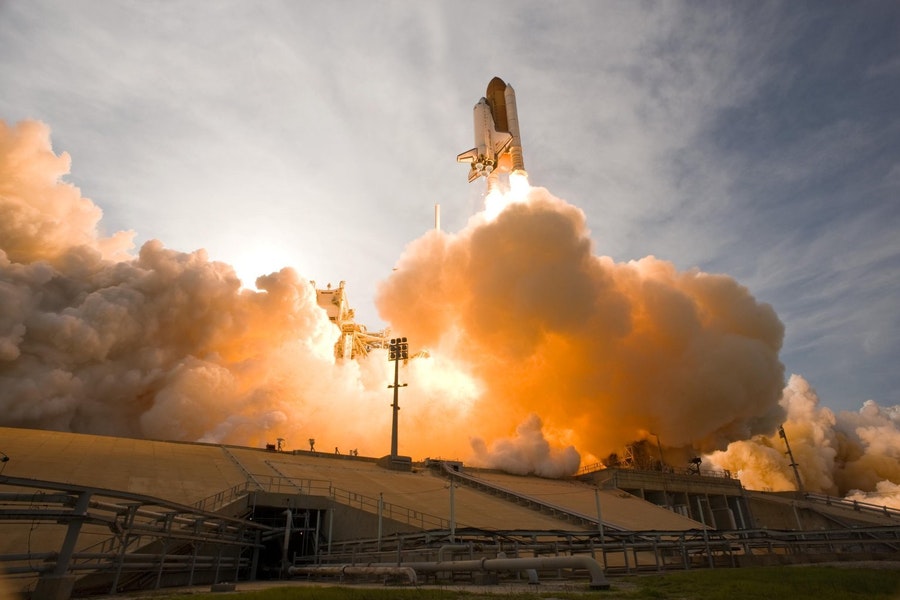
Catapulting cargo into space is a very real possibility for the near future.
There are many different technologies being investigated by different governments and companies with the aim of reducing space launch costs significantly.
China for example is reportedly seriously looking at what is commonly referred to as a space elevator – a system that could see a container being attached to a super strong cable that is spanned between earth and a structure in geo-stationery orbit in space.
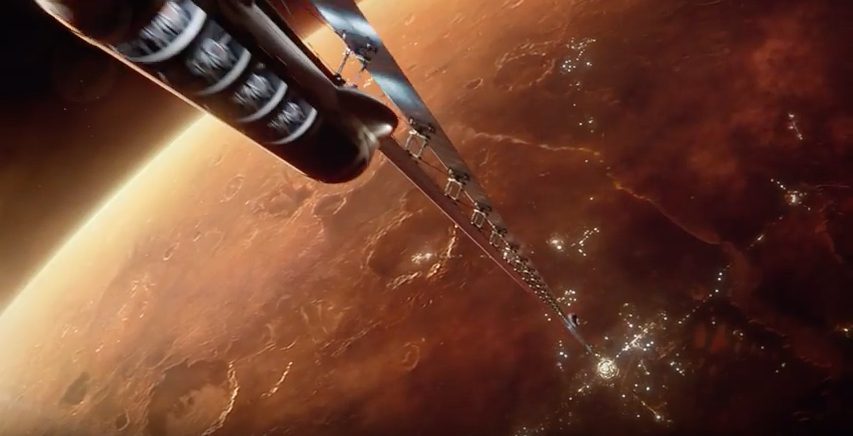
The travel would be much slower than a rocket launch, but much safer and ultimately as much as 70% cheaper.
And that’s because a large chunk of the budget, which runs into millions of dollars – goes towards carefully designed engines and the specialist rocket fuel required to power them.
Remove those, and suddenly you bring the cost of sub-orbital launches down by significant multiples.
A High-Tech Slingshot Could Be The Answer
NASA is busy testing a new way of getting things into space – by spinning them really fast and then simply throwing them straight up into the air into the exit the atmosphere.
It might sound a little cartoonish, but the concept is built on sound science being perfected by the California-based tech company SpinLaunch.
The idea is so sound that NASA has agreed for them to launch a payload later this year, as a test for potential future commercial launches.
How A Space Slingshot Works

It uses the same kinetic energy principles as the slingshots some of us played with as kids.
First they position a payload, like say a satellite at one end of a large, carbon fiber arm that is placed inside an upright, circular vacuum chamber.
The payload – which is spun with the help of an electric motor at the center of the chamber – reaches speeds of up to 8 000km per hour.
Then it’s up to a computer to figure out exactly when to activate the release button, so that the payload shoots straight upwards, out of the vacuum chamber and through the vertical exit tube.
Due to the high velocity, the payload then tears through the Earth’s thick lower atmosphere until it gets above the stratosphere.
Some Familiar Tech Is Still Needed
Rockets aren’t entirely absent, because once in the stratosphere, a small rocket engine fires to help it into the desired orbit around the Earth.
They have done half a dozen launches so far and now they are getting ready to impress NASA enough to be given a launch contract.
Their future challenges: payload holds that can withstand the extreme stress of high speed tight circles, the sudden impact and super high temps of the release and of course the sonic boom, which you can actually hear in the video below: