


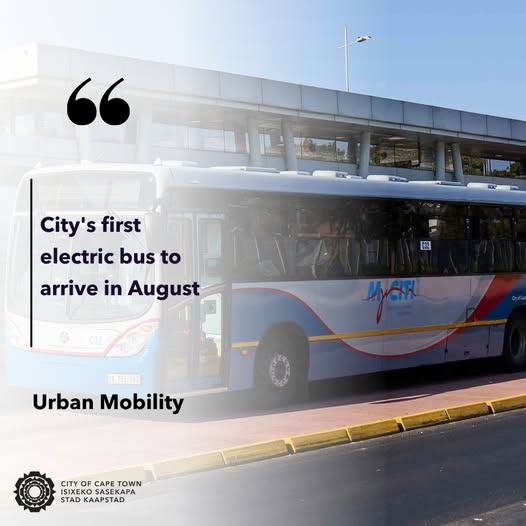
The City of Cape Town is preparing to introduce electric buses (e-buses) into its MyCiTi transport system, with a strong focus on long-term savings and reduced operating costs.
The first electric bus is expected to arrive in August, followed by 13 more between October and December 2026. In total, the City will receive 30 e-buses between 2026 and mid-2027.
The Department of Urban Mobility says a key motivation behind the rollout is reducing operating expenses.
Mayoral Committee for Urban Mobility, Rob Quintas, says e-buses are expected to significantly reduce fuel and maintenance costs compared to diesel buses.
“The delivery of the electric bus fleet cannot be more timeous, given the volatility of the energy markets and uncertain geopolitical environment. Some countries operating e-buses have noted a reduction of up to 70% in operating costs, and we will be conducting research soon to determine what type of savings Cape Town can look forward to.”
Before full rollout, the buses will be tested on MyCiTi routes in areas such as Mitchells Plain, Khayelitsha, Wynberg, Claremont, and the Cape Town CBD.
This testing phase will run for about 12 months to evaluate performance under local conditions, including battery life, charging time, and energy use across different routes and passenger loads.
“The research will help us understand how the electric buses will perform in our local context and what challenges we need to consider before we roll out the e-bus fleet in 2027. This information will assist us with planning and preparations, such as the training of the bus drivers, maintenance requirements, passenger loads, fault reporting, and so forth.”
If testing is successful, the first e-buses are expected to enter full passenger service by July 2027.


