

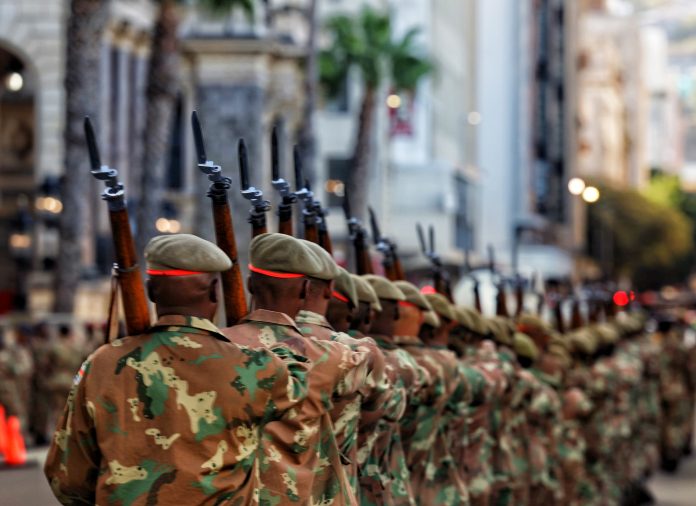
The Cape Crime Crisis Coalition (C4) have voiced its opposition to plans to deploy the South African National Defence Force (SANDF) to fight gang violence on the Cape Flats.
The decision was announced by President Cyril Ramaphosa during the State of the Nation Address (SONA) last Thursday, where he confirmed that soldiers would be sent to gang-affected areas in the Western Cape and Gauteng.
However, C4, in a statement, rejected the decision, noting that the decision would not solve the problem.
“When a government calls in the army to perform civilian policing, it confesses that its police leadership is broken, its political oversight has failed, and its reserves of competent governance are exhausted,” read C4’s 13 February statement.
It said the decision showed a lack of strategic initiative.
Further to this, the organisation noted that an evaluation of the army’s 2019 deployment to the Cape Flats, including areas like Mitchell’s Plain and Nyanga, showed that their presence had little impact.
“In a 2020 evaluation of Operation Prosper examining the role and impact of the SANDF, including its impact on the murder rate the findings show: ‘That there does appear to have been a reduction in murders in the month when the deployment started but found no evidence that the army presence significantly reduced murders in the affected communities over the deployment period, as compared with similar ones where the army was absent.’”
The organisation noted that when soldiers left, gangs continued “terrorising” communities, with the level of killings having risen over the last year and mass shootings having become commonplace.
C4 spokesperson, Imraahn Mukkadam, said a different approach is needed.
“There are much more viable alternatives that could have been employed, such as declaring a provincial state of disaster, which would have unleashed a lot of state resources and created a situation where the state and its various departments would have to coordinate much better to address the root causes of crime and gangsterism,” said Mukkadam.
C4 maintains that gangs are highly organised criminal syndicates requiring experienced detectives and a capable police service.
“Gangs and organised crime are embedded social institutions. They are not weakened by these deployments. They adapt. They consolidate. They watch the state cycle through the same performative gestures and understand that the underlying machinery remains broken,” read the C4 statement.
It continues its call for a provincial State of Disaster to address the social and economic roots of gangsterism.
“You cannot patrol your way out of organised crime. There is a third path one that does not treat the Cape Flats as a war zone, but as a disaster area deserving of the same urgency and resources we extend to communities struck by flood, fire, or pandemic.”


