


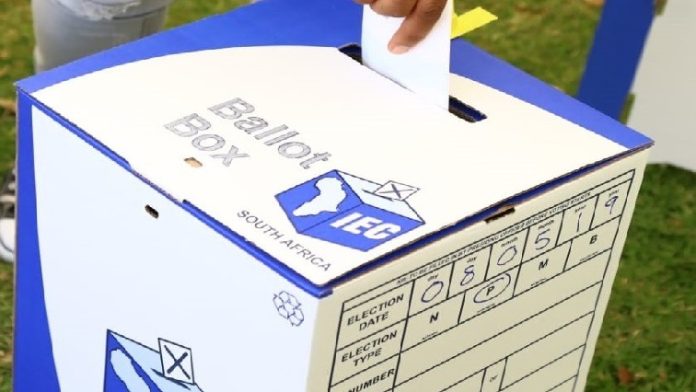
The Electoral Commission has certified 136,790 candidates to contest South Africa’s 2026 Local Government Elections on 4 November, with the final candidate lists set to be published later on Wednesday, 16 September.
The number of certified candidates is significantly higher than in 2021, when 95,427 candidates were certified to contest a similar number of seats.
A total of 10,526 council seats will be contested across the country’s eight metropolitan municipalities, 44 district municipalities and 205 local municipalities.
Cape Town to have 55 parties on PR ballot
In Cape Town, 55 political parties will contest the proportional representation ballot.
The IEC says this means a double-column PR ballot paper will be required, as municipalities with more than 48 parties cannot accommodate all contestants in a single column.
Cape Town has the fifth-highest number of parties contesting PR seats, behind Johannesburg with 75, Tshwane with 70, eThekwini with 69 and Ekurhuleni with 67.
The large number of candidates contesting ward seats in some areas will also result in double-column ward ballots.
More than 5,000 candidates disqualified
The IEC says 5,096 candidates were disqualified following statutory reviews.
Of these, 1,596 were PR candidates, and 3,500 were ward candidates.
The Commission says most disqualifications resulted from candidates or parties failing to meet administrative requirements, including paying the required deposits and submitting prescribed nomination documents.
Some candidates were also disqualified because they were not correctly registered on the voters’ roll in the municipalities they wanted to contest.
Special vote applications open next week
The IEC says applications for special votes will open on 21 September and close at 5 pm on 12 October.
Special votes include home visits for voters who are physically unable to get to a voting station, as well as voters who can get to their station but cannot vote on election day.
Approved voters in the latter category will vote at their registered voting station on 2 or 3 November.
Voters who will be outside their voting districts on 4 November, including people working in essential services and the media, may also qualify for a special vote at their registered voting station.
Applications can be made through IEC local offices, the Commission’s website, or by SMS to 32249.
Check your voting station
Voters can confirm their voting station and voters’ roll sequence number ahead of election day.
They can SMS their ID number to 32810, call the IEC contact centre on 0800 11 8000, or WhatsApp “Hi” to 0600 88 0000 and use the “Am I registered” menu.
Code of Conduct to be signed
Contesting political parties will sign the Electoral Code of Conduct on 23 September.
The IEC says a new Disinformation Code has also been promulgated for these elections, aimed at addressing false or misleading information and protecting the integrity of the electoral process.
Candidate certificates will be issued electronically on 25 September.
The IEC says the publication of the final candidate lists will allow ballot-paper printing to begin after the ballot draw at the signing of the Code of Conduct.
More than 23,000 presiding officers and nearly 30,000 deputy presiding officers are being recruited, with the Commission saying more than half have already been recruited and training has begun.
The IEC has secured 23,696 voting stations countrywide, although that number could still change slightly as outstanding lease agreements are finalised.