


Researchers from the African Centre for Migration & Society (ACMS) have warned that growing anti-migrant sentiment in South Africa could damage the country’s economy, international reputation and constitutional democracy.
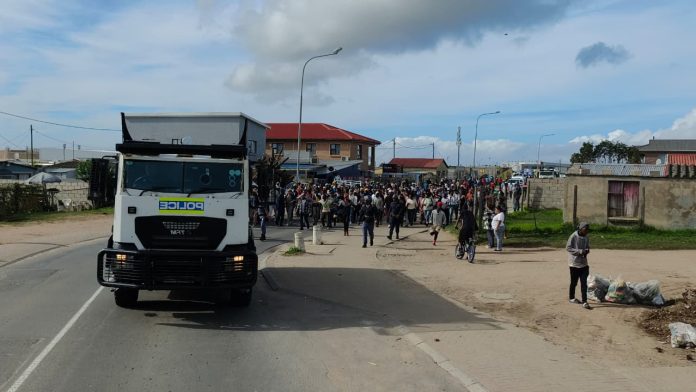
The warning comes amid renewed anti-immigration protests and growing concerns over planned demonstrations on 30 June.
In a recent ACMS video discussion, senior researcher Associate Professor Jo Vearey said migrants are increasingly being used as political scapegoats for broader social and economic problems.
“We then have political parties using this as part of their campaigning; it resonates with people,” Vearey said.
“People aren’t saying: ‘Well, what next? If we get rid of these foreign nationals, what’s actually going to change? Are you going to suddenly be improving service delivery?’ Obviously not.”
Professor Loren Landau said efforts to exclude migrants could also have serious economic consequences.
“We think in Johannesburg, the informal trade in clothing and goods is probably worth something like a billion dollars a year,” he said.
“If you shut that down, if you stop trade within the region, you’re losing that money. And that’s money that goes straight into people’s hands. It’s spent within the economy.”
The researchers also warned that recent anti-migrant mobilisation is harming South Africa’s standing abroad.
“The ways in which we are seeing things manifest currently is harming South Africa’s reputation, both within the southern African region, continentally and globally,” Vearey said.
She added that government efforts to challenge anti-migrant narratives have been insufficient.
In a separate opinion piece, Landau and ACMS researcher Dr Pierre Misago argued that xenophobic mobilisation has become entrenched in South Africa’s political landscape and is often enabled by failures of the state to act against vigilante groups.
According to data collected by Xenowatch, 406 verified xenophobic incidents were recorded between 2022 and 2025, resulting in 75 deaths. In 2025 alone, 151 incidents were documented, while 22 incidents were recorded during the first five months of 2026.
The researchers argue that tackling the problem requires stronger law enforcement against both illegal migration and vigilante violence, as well as greater political accountability for leaders whose rhetoric may fuel hostility toward migrants.
They warn that unless decisive action is taken, South Africa risks further economic losses, reputational damage and growing social divisions.