


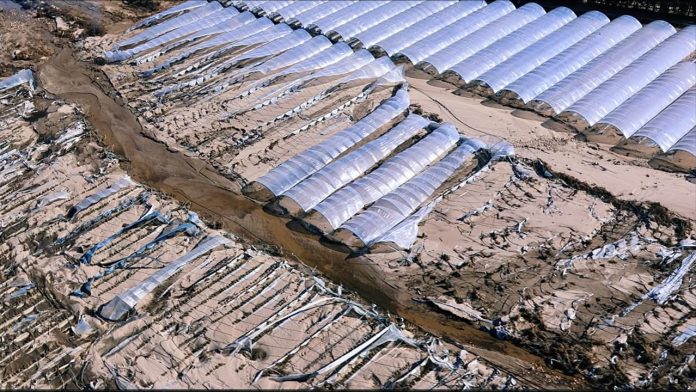
The Western Cape Department of Agriculture says last week’s severe weather has had a significant impact on the sector, with damage assessments now underway.
ALSO READ: Western Cape counts cost of devastating storms
A series of intense cold fronts resulted in widespread flooding, infrastructure damage, and disruptions to farming communities across key regions.
MEC Ivan Meyer says extensive damage has been reported in areas such as the Hex River Valley, Grabouw/Elgin, and the Ceres and Worcester regions.
Flooding has devastated vineyards, orchards, and cropland, with some farmers reporting the complete loss of harvests, including apple crops in Grabouw.
In addition to crop losses, farms have sustained serious infrastructure damage. Irrigation systems, access roads, and bridges have been compromised, while power disruptions have affected irrigation, storage, and packhouse operations.
In several instances, farms have been cut off entirely due to flooded rivers and damaged transport routes.
The Department says the knock-on effects are expected to impact the province’s agricultural economy, particularly fruit and wine export supply chains.
Delays in harvesting and transport are likely to reduce yields, affect export quality, and increase financial losses across the sector.
To support response efforts, the Department has deployed its Disaster Risk Reduction (DRR) Damage Assessment App to improve the collection of real-time data from affected farming areas.
This digital tool is strengthening situational awareness and coordinating recovery efforts, despite challenges such as power outages, poor connectivity, and limited access to some rural communities.
The Department is currently consolidating preliminary damage reports gathered through the app, extension officers, and industry stakeholders.
As conditions stabilise and access improves, teams will conduct on-site verification visits to assess crop losses, infrastructure damage and broader impacts on livelihoods, with priority given to high-value agricultural regions.
“In several affected areas, contractors have already been appointed to begin repairing critical road infrastructure. Mopping-up operations, including the clearing of roads and ongoing humanitarian support, will continue as part of the coordinated provincial response.”
The Provincial Government will meet on Wednesday, 20 May 2026, to consider classifying the event as a provincial disaster. Following this, the Western Cape Government will approach the National Disaster Management Centre to seek a formal declaration, thereby unlocking additional national resources to support recovery efforts.
“The scale of this event presents a complex and evolving challenge for the agricultural sector. Our immediate priority is to ensure accurate damage assessment and to support farmers through a coordinated, data-driven recovery process.”
Meyer has extended his gratitude to the many farmers, organised agriculture, thousands of volunteers, and law enforcement agencies for their support during this disaster.