


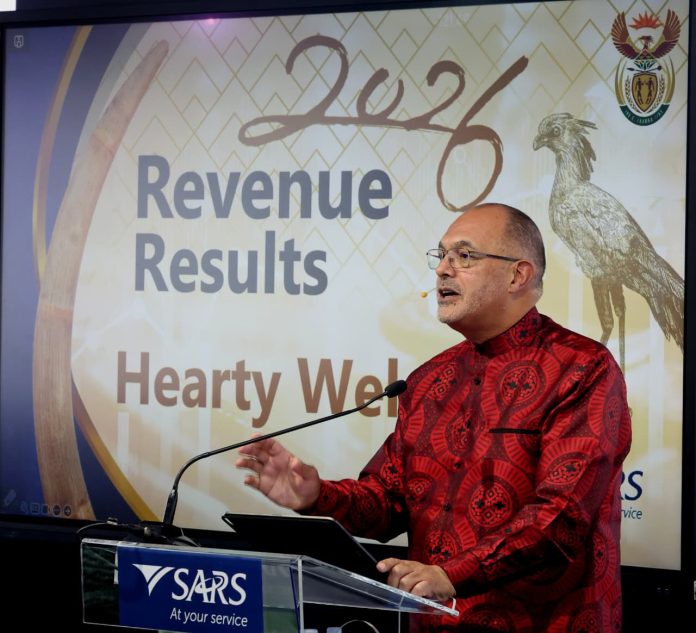
The South African Revenue Service (SARS) has reached a historic milestone, collecting more than R2 trillion in net revenue for the 2025/26 financial year.
In a briefing on 1 April 2026, SARS confirmed it collected R2.01 trillion, marking the first time the tax authority has crossed the R2 trillion threshold in South Africa’s democratic era.
The figure represents an 8.4% increase from the previous financial year and is R24.7 billion higher than earlier estimates announced in the national Budget.
SARS says the improved performance is due to stronger compliance measures, better administrative efficiency, and some support from the mining sector. The higher-than-expected revenue also helped government avoid a planned increase in VAT.
Commissioner Edward Kieswetter credited the achievement to the work of SARS staff and taxpayers. He said the milestone reflects “the diligent work of more than 14,500 employees” and the contribution of compliant taxpayers.
“Every rand collected helps build a capable state and enables government to deliver services to South Africans,” Kieswetter said.
Key tax categories, including VAT and Pay-As-You-Earn (PAYE), recorded solid growth, supported by improved consumer sentiment, lower interest rates and targeted compliance efforts.
Despite the strong performance, SARS warned that the illicit economy remains a major challenge, costing the country more than R100 billion in lost revenue each year through activities such as smuggling, fraud and counterfeit trade.
The agency says it has stepped up enforcement, preventing an estimated R75 billion in revenue losses through investigations and audits during the year.
Looking ahead, Kieswetter says SARS is rolling out its “Modernisation 3.0” strategy, which includes digital identity systems, artificial intelligence, and automated tax processes aimed at improving compliance and making tax administration more efficient.
Since 1994, SARS has collected over R25 trillion in revenue, with nearly half of that raised in the past seven years.
Kieswetter, whose term is nearing its end, said the milestone highlights the importance of public trust and voluntary compliance in sustaining the country’s fiscal health.