


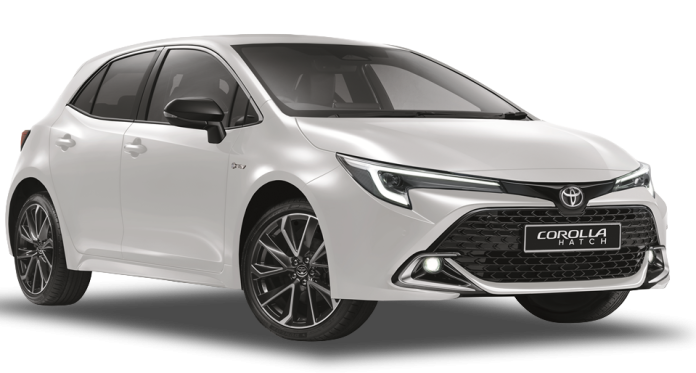
Are people open to hybrid vehicles as their next purchase? That is the question being asked with April’s big fuel price hike shock, setting tongues wagging in the country. According to a recent study, 84% of respondents said they are open to hybrid vehicles as their next purchase. This reflects a shift toward cost control rather than environmental considerations.
Are people open to hybrid vehicles as their next purchase?
According to Yazi’s March 2026 SA Fuel & Energy Sentiment Study, rising fuel costs are pushing more South Africans to consider hybrid vehicles instead of fully electric cars. The study has found that consumers are prioritising cost savings, flexibility and energy security over a full transition to EVs. It also found that 75% of respondents said global conflict was already affecting their monthly budget, while 81% described their mood as “frustrated” or “anxious”. At current inland petrol prices of R20.19 a litre, 24% said they were already considering switching to a more fuel-efficient vehicle. Overall, 84% said they were open or very open to considering a hybrid as their next car.
Petrol pain is driving South Africans into Chinese hybrids
The findings point to a market that is not moving directly from petrol to battery-electric vehicles, but is instead gravitating toward hybrids. This is a way to reduce fuel exposure without taking on the risks associated with charging access and grid reliability. The CEO of Yazi, Tim Treagus, says they’ve already seen South Africans adopt a solar-plus-grid mindset at home, hedging against load-shedding by building in optionality. He says this data shows the same logic is now shaping how people think about their next car.
“Hybrids offer exactly that: energy flexibility without a single point of failure, ” says the CEO of Yazi, Tim Treagus.
Fuel pressure pushes South Africans toward hybrids
Concerns about load-shedding and charging infrastructure remain central to the reluctance to adopt full EVs. According to the study, respondents identified grid unreliability and limited charging access outside major metros as major constraints, with concerns appearing consistently in feedback from Limpopo, Mpumalanga and KwaZulu-Natal. The data also shows that fuel pressure is already affecting daily behaviour. Respondents reported cutting back on discretionary driving, combining trips, planning routes more carefully, and, in some cases, reducing church attendance, shopping trips, and other routine travel. Nearly one in four respondents said they were already considering changing vehicles at current prices, while 29% said they would do so at R25 a litre and 30% at R30 a litre.
Concerns about load-shedding and charging infrastructure
Affordability remains the biggest barrier to switching. Across the full sample, 38% said lower vehicle prices were the most important factor that would influence a move away from conventional petrol or diesel vehicles. This is ahead of charging infrastructure at 26% and proof of real cost savings at 18%. That may create an opening for Chinese manufacturers, who have expanded their presence in South Africa’s hybrid and electric vehicle market with lower-priced offerings. The survey found that 44% of respondents said they would trust a Chinese-manufactured hybrid EV.
“Consumers are increasingly looking beyond badge and performance to factors such as running costs, value for money and everyday usability,” says the General Manager of OMODA & JAECOO South Africa, Hans Greyling.
Another 32% said price would determine their willingness to buy. Only 11% said they would refuse outright. Among the models highlighted in the study is the JAECOO J7 SHS, a plug-in hybrid priced at R689,900, with a stated electric-only range of 90km and a combined range of more than 1,200km. Yazi said the arrival of more affordable Chinese hybrids and plug-in hybrids is helping to narrow the affordability gap that has slowed broader adoption. General Manager of OMODA & JAECOO South Africa, Hans Greyling, says the findings reflected a wider shift in the way buyers were assessing vehicles.
The findings suggest that, for many South African motorists, hybrids are being viewed less as a stepping stone to full electrification than as a practical response to high fuel prices, infrastructure uncertainty and broader household cost pressure.
Yazi is a WhatsApp-native market research platform that enables organisations to conduct surveys, AI-moderated interviews, diary studies, voice research and panel studies at scale, all through WhatsApp. The study surveyed 1,006 South African adults with a near-balanced gender split (60% female, 40% male), ages concentrated across the 18 to 54 working-age population (96% of the sample), and household incomes well distributed across brackets.
READ MORE: Affordable Hybrid Cars in South Africa: 2025’s Top Picks for Budget-Conscious Drivers