


Questions are mounting over the Trump administration’s reasons for launching airstrikes on Iran, as conflicting explanations from senior officials have emerged.
On Monday, Secretary of State Marco Rubio appeared to undercut earlier claims that Iran was preparing an imminent attack on the United States.
Rubio told reporters the US knew that Israel was planning to strike Iran and expected Tehran would retaliate against American forces. He said Washington acted preemptively to avoid higher casualties.
“We knew that there was going to be an Israeli action. We knew that that would precipitate an attack against American forces, and we knew that if we didn’t pre-emptively go after them before they launched those attacks, we would suffer higher casualties.”
On Monday night, vice-president JD Vance said in an interview on Fox News that the US aim was to make sure “Iran cannot have a nuclear weapon”.
“The president wants to make it clear to the Iranians and to the world that he is not going to rest until he accomplishes that all-important objective of ensuring that Iran can’t have a nuclear weapon.”
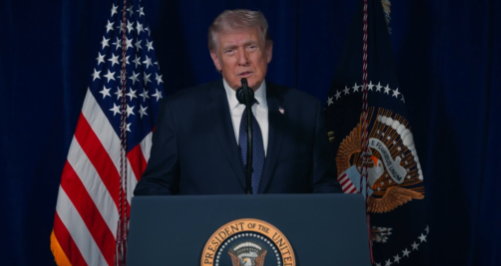
President Trump offered a different version on Tuesday.
Speaking in the Oval Office, he said he believed Iran was going to attack first.
“If anything, I might have forced Israel’s hand,” Trump said, rejecting suggestions that Netanyahu pushed the United States into war.
Democratic Senator Mark Warner, the top Democrat on the Senate Intelligence Committee, said he had seen no evidence of an imminent threat to the United States. He said there may have been a threat to Israel, but warned that equating that with a direct threat to America would be “uncharted territory.”
Senator Angus King also questioned whether Netanyahu had driven the escalation, pressing Pentagon policy official Elbridge Colby during a hearing.
The White House has pushed back strongly. Press Secretary Karoline Leavitt dismissed claims that Israel dragged the US into the conflict.
The shifting explanations come as the administration cycles through multiple justifications for the war.
Initially, Trump said he was deploying forces to the Middle East in response to Iran’s crackdown on pro-democracy protesters. He later cited Iran’s nuclear programme, with special envoy Steve Witkoff claiming Tehran could develop a weapon within a week. US intelligence assessments have previously suggested Iran would not have that capability for years.
Trump then pointed to Iran’s ballistic missile programme, warning it could soon threaten US interests and possibly the American homeland. No public evidence was presented.
Most recently, he said Iran was preparing an imminent strike, a claim he insisted was unrelated to nuclear negotiations held days earlier in Geneva.
Iran has described the US/Israeli assault as unprovoked, denying that it is seeking a nuclear weapon.
The US-based Human Rights Activists News Agency (Hrana) says more than 1,000 civilians have been killed in Iran since the conflict began. Missiles reportedly destroyed a girl’s primary school in Minab, southern Iran, killing around 150 and wounding almost 100.
A US military commander says it has hit more than 2,000 targets in the country. Iran is retaliating by launching missiles and drones, hitting infrastructure in several countries across the Middle East.