


Political parties, industry groups, economists and business organisations have outlined their expectations for the 2026 Budget, with calls for tax relief, fiscal discipline and reforms aimed at accelerating economic growth, while protecting households and businesses under financial pressure.
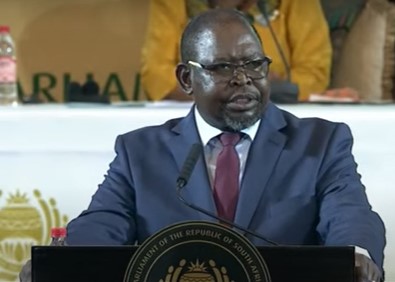
Finance Minister Enoch Godongwana is expected to table the national budget on Wednesday, 25 February, amid rising debt-service costs, slow economic growth and mounting pressure to avoid new taxes.
DA calls for tax relief and spending reforms
The Democratic Alliance (DA) says Budget 2026 must avoid both direct and indirect tax increases, arguing that South Africans are already heavily taxed.
DA finance spokesperson Mark Burke said personal income tax brackets and rebates should be adjusted in line with inflation to prevent bracket creep, where taxpayers effectively pay more tax despite stagnant real incomes.
The party expects no increases in personal income tax, corporate tax or VAT, and says government should begin shifting toward reducing taxes rather than raising them.
The DA also warned that debt-service costs, currently consuming about 22 cents of every rand collected, are crowding out spending on essential services such as health, education and policing. It called for tighter controls on state-owned enterprise debt and clearer progress on spending reforms, including action against so-called “ghost workers” in the public sector.
ACDP: Fiscal consolidation showing progress
The African Christian Democratic Party (ACDP) believes improving tax collection and a potential revenue windfall should remove the need for tax increases.
ACDP parliamentary whip Steve Swart said fiscal consolidation appears to be gaining traction, with projections pointing to a growing primary budget surplus and stabilising debt levels, although still high.
The party argues that stronger economic growth of between three and five percent annually is needed to meaningfully address unemployment, well above current projections of around 1.4 percent growth next year. It also called for structural reforms in energy, logistics, water infrastructure and local government to unlock investment and job creation.
SME sector pushes VAT threshold reform
Small business funder Lula has renewed its call for government to raise the compulsory VAT registration threshold from R1 million to R3 million, arguing that the current limit discourages business expansion.
Chief Risk Officer Garth Rossiter said the existing threshold has effectively become a “glass ceiling” for many small enterprises, forcing owners to limit growth to avoid costly compliance requirements.
According to Lula, increasing the threshold would unlock liquidity and productivity across the SME sector, which contributes roughly 40% of South Africa’s GDP. The organisation argues that allowing businesses to scale more easily would ultimately increase corporate tax revenues through higher profits and employment.
Rossiter added that beyond tax reform, businesses need long-term certainty around infrastructure, particularly reliable energy and water supply, warning that economic growth cannot be sustained without expanding capacity to support new digital and industrial investment.
Healthcare sector warns against cutting medical tax credits
The Board of Healthcare Funders (BHF) has urged government to retain and inflation-adjust medical scheme tax credits, warning that removing them could push hundreds of thousands of South Africans out of private healthcare cover.
Managing director Katlego Mothudi said the credits remain essential financial support for nearly nine million medical scheme members, many of whom are low- and middle-income earners.
The organisation cautioned that failing to adjust credits in line with inflation effectively increases healthcare costs for households and could add pressure to an already strained public health system while National Health Insurance reforms are still being phased in.
Tax experts expect stronger enforcement, limited tax hikes
The South African Institute of Taxation (SAIT) expects government to rely more on improved tax compliance rather than higher tax rates to boost revenue.
Acting deputy CEO Keitumetse Sesana said enhanced digital enforcement and data analytics by SARS are likely to intensify audits and compliance checks as authorities work to close an estimated R800-billion tax gap.
SAIT analysts also anticipate targeted tax incentives to stimulate investment in sectors such as renewable energy, digital infrastructure and small businesses, alongside the rollout of global minimum tax rules expected to generate additional corporate tax revenue.
Industry warns excise increases could fuel illicit trade
Meanwhile, spirits producer Diageo South Africa has called for a pause in excise tax increases, warning that government taxes on spirits could exceed R100 per bottle following the budget.
The company argues that sustained excise hikes have contributed to the growth of illicit alcohol markets, undermining legitimate producers and costing the state billions in lost revenue each year.
Economists predict a steady, consolidation-focused budget
Economists broadly expect a relatively stable budget focused on consolidation rather than sweeping policy changes.
Johann Els, chief economist at PSG Financial Services, predicts a largely uneventful but positive fiscal framework supported by stronger-than-expected revenue collections from mining, VAT and personal income tax. Improved revenues could help narrow the budget deficit and support gradual debt stabilisation without major tax shocks.
Household impact remains central
Financial planners say ordinary South Africans will ultimately feel the budget through changes affecting take-home pay, fuel costs, healthcare affordability and social spending priorities.
With households already spending a large share of income on essentials such as food, housing and transport, analysts warn that even modest policy shifts could have noticeable effects on monthly budgets.