


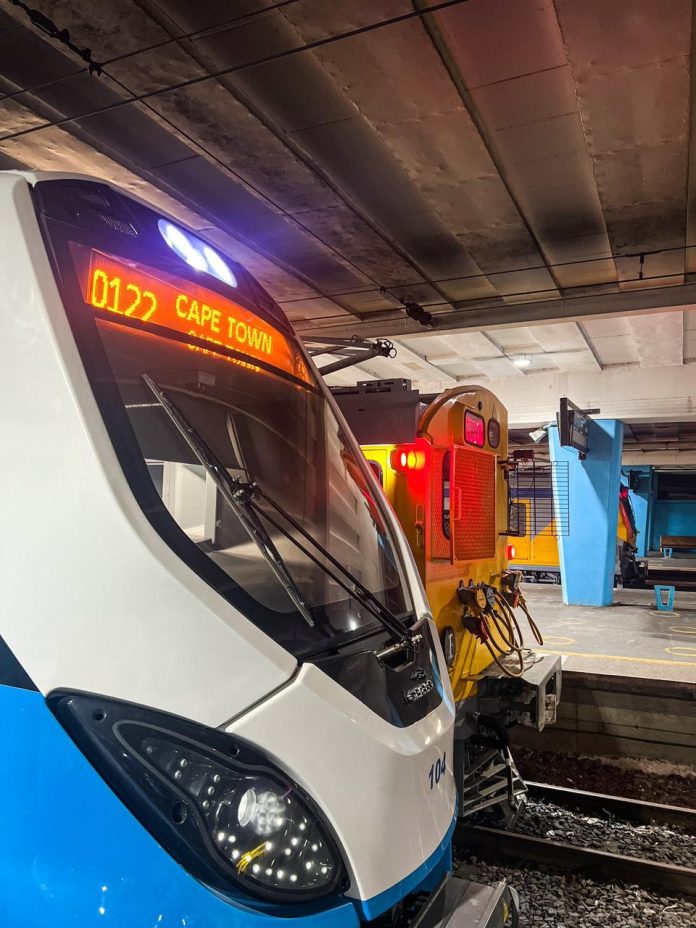
The City of Cape Town’s Council yesterday adopted its Rail Business Plan and Vision 2050, which sets out ambitious goals for the Metro, underpinned by a fully functioning public rail system.
Mayor Geordin Hill-Lewis says the detailed plan includes the goal that 75% of passenger trips should be made by public transport by 2050, with rail as the backbone of an integrated system under City control.
The City says it regards passenger rail takeover as essential to improving integrated public transport across the metro, one of several key means to achieving its broader Long Term Plan target of 110% GDP growth by 2050.
The Rail Business Plan explores nine devolution scenarios, identifying the three most viable options. All viable options involve the devolution of rail services, associated assets and infrastructure to the City with the participation of the private sector operating services on a contractual or comprehensive concession basis.
Crucially, funding for the devolution will have to come from the national fiscus, as there is no more room left to increase rates.
Hill-Lewis sets out the vision for Cape Town:
“In the Cape Town of 2050, we’ll mostly use affordable public transport to get around, our streets will be much safer due to smart policing, we’ll source a healthy portion of our water and electricity from alternative sources for greater security, and our natural environment will be protected and restored for future generations.”
He says the next step is to re-engage with the National Government to devolve passenger rail to the City.
“The National White Paper on Rail and the Constitution both recognise that local government is best positioned to deliver integrated, affordable, and accountable public transport through coordinated planning across transport modes.”
Beyond a fully functioning rail service, Hill-Lewis says other focus areas for Vision 2050 include boosting infrastructure investment, improving ease of doing business, and expanding data-driven policing for safer communities.
It also aims to modernise governance through digital technology and AI, secure 35% of electricity from alternative sources by 2030, and source 25% of water from non-surface supplies by 2040.
Housing delivery is targeted at 50,000 opportunities a year, alongside major sanitation upgrades and stronger climate-resilience measures.
The City also plans to divert 70% of waste from landfill by 2050, enhance biodiversity, and plant 100,000 new trees as part of its Urban Forest Policy.