


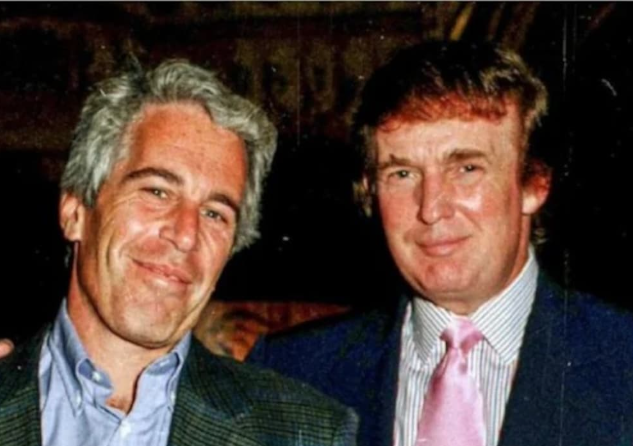
After a 43-day U.S. government shutdown that paralysed Congress and left Washington gridlocked, newly released emails from the late financier Jeffrey Epstein have placed the controversy over his alleged ties to President Donald Trump at the centre of U.S. politics.
This came after the House Committee on Oversight and Government Reform, led by Democrats, published three explosive emails from Epstein’s estate on Wednesday, 12 November.
For weeks, House Democrats, including Representative Eric Swalwell (D-CA), have dubbed the funding stalemate the “Epstein Shutdown,” suggesting that the Republican-led House was obstructing government business to prevent the release of Epstein-related documents.
The first email, sent from Epstein to Ghislaine Maxwell in April 2011, referenced “the dog that hasn’t barked”, a metaphor for Trump’s silence about his time at Epstein’s home.
“I want you to realise that that dog that hasn’t barked is Trump,” Epstein wrote, claiming a victim “spent hours at my house with him.” Maxwell replied: “I have been thinking about that.”
A second message, from January 2019, showed Epstein telling Trump biographer Michael Wolff that Trump “knew about the girls,” while a third thread from December 2015 suggested Epstein discussed using Trump’s denials of their connection as potential leverage. Legal analysts say the emails imply Epstein kept evidence that could compromise Trump.
House Speaker Mike Johnson (R-LA) dismissed the document release as “another publicity stunt by the Democrats,” while Oversight Chair James Comer (R-KY) accused Democrats of “cherry-picking” files. However, after the committee published an additional 20,000 pages of emails from Epstein’s estate, the revelations continued to draw widespread attention.
Among the new documents was a 2015 email in which Epstein offered photos of Trump with young women to a New York Times reporter, who encouraged him to “get some of this out there, for the good of the nation.” No such story ever appeared before or after the 2016 election.
The release of the emails coincided with the reopening of government operations after the Senate passed a funding bill earlier this week. The delay had also prevented newly elected Representative Adelita Grijalva (D-AZ) from being sworn in, blocking her from signing a discharge petition to force a House vote compelling the Department of Justice to release all Epstein investigation files.
With the House back in session, Johnson swore in Grijalva, and she promptly became the 218th signature on the petition. Once it matures procedurally, Johnson will be required to schedule a vote on the bill.
Behind the scenes, sources say Trump personally lobbied Republican lawmakers to withdraw their support, focusing particularly on Representatives Nancy Mace (R-SC) and Lauren Boebert (R-CO). According to CNN, Trump met Boebert in the White House Situation Room alongside Attorney General Pam Bondi, Deputy Attorney General Todd Blanche, and FBI Director Kash Patel.
Despite the pressure, no Republicans withdrew their signatures. Analysts now estimate that as many as 100 House Republicans could vote in favour of releasing the Epstein files, an unprecedented bipartisan move reflecting growing unease among lawmakers about appearing complicit in a potential cover-up.
“If this comes to a vote, it’s going to be on the record forever,” Representative Thomas Massie (R-KY) told CNN. “What are you going to say in 2028 when people ask why you covered up for a pedophile in 2025?”
Trump’s approval ratings continue to slide, down to 33% in the latest AP–NORC poll, while reports of erratic behaviour have alarmed members of his own party. As Representative Swalwell posted on social media earlier today, as new Epstein revelations spread rapidly online: “This is the beginning of the end.”
Additional source: Political Historian Heather Cox Richardson/Facebook