


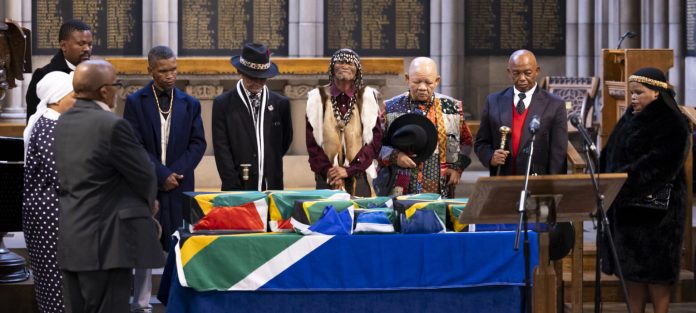
Ancestral Human Remains have been repatriated to Cape Town. The Sport, Arts and Culture Department, along with its implementing agencies and collaborators, officiated the solemn return and homecoming of the remains last week. These implementing agencies are Iziko Museums of South Africa and the South African Heritage Resource Agency’s Repatriation and Restitution Office. This campaign was carried out in collaboration with representatives of the Northern Cape Reburial Task Team.
Ancestral Human Remains have been repatriated to Cape Town
This solemn occasion marked the dignified return of ancestral human remains from the Hunterian Museum in Glasgow, Scotland, to South Africa. The Northern Cape Reburial Task Team represented the first indigenous Khoi and San communities impacted by the historical displacement of ancestral remains. The first indigenous Khoi and San communities were represented by the Nama, Griekwa, Korana and San/Bushman.
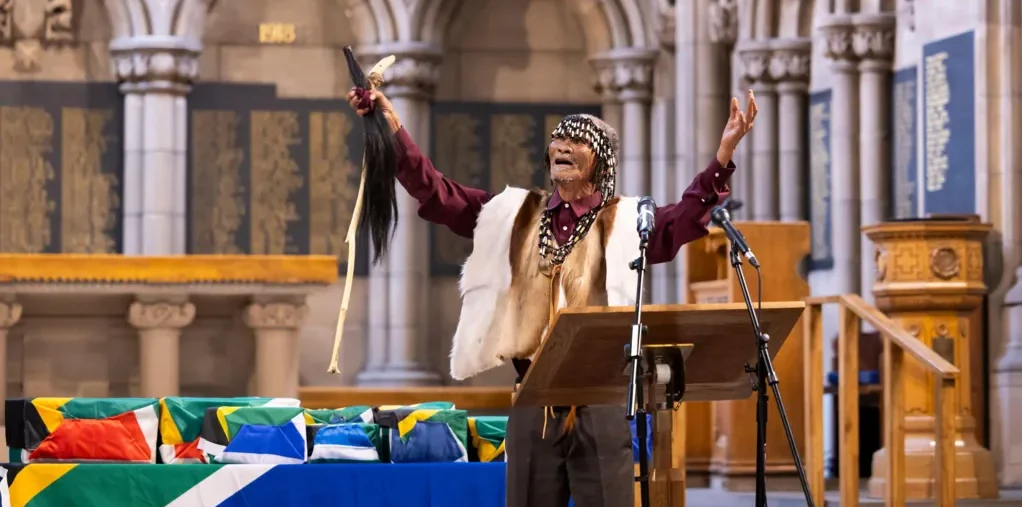
A solemn occasion – Ancestral Human Remains
The National Minister for Sport, Arts and Culture, Gayton McKenzie, along with their implementing agencies, have jointly announced the repatriation of ancestral human remains from The Hunterian collection in Glasgow, Scotland, to South Africa. The implementing agencies are Iziko Museums of South Africa and the South African Heritage Resources Agency (SAHRA). It’s also in partnership with the Northern Cape Reburial Task Team.
From the Hunterian collection in Glasgow, Scotland, to South Africa
This milestone for South Africa has been enabled by the recently endorsed National Policy on Repatriation of Human Remains and Heritage Objects. The policy has created a structured framework for coordinated country-to-country repatriation. It also sets the foundation for a more inclusive and state-led redress process. With this project coming to a full circle, it is the first implementation of one of the policy mandates on the repatriation and restitution of human remains in foreign institutions such as Museums.
This milestone for South Africa
Arriving from the Hunterian Museum last week were the partial remains of six individuals. Two plaster face-casts and a soapstone smoking pipe excavated from a burial cairn were also repatriated. These were unethically exhumed between 1868 and 1924 and deposited with the University of Glasgow by alumni and other donors. The remains of five of these individuals and the smoking pipe originate from the Northern Cape. They have been claimed by descendant members of the San, Nama, Griqua and Korana populations.
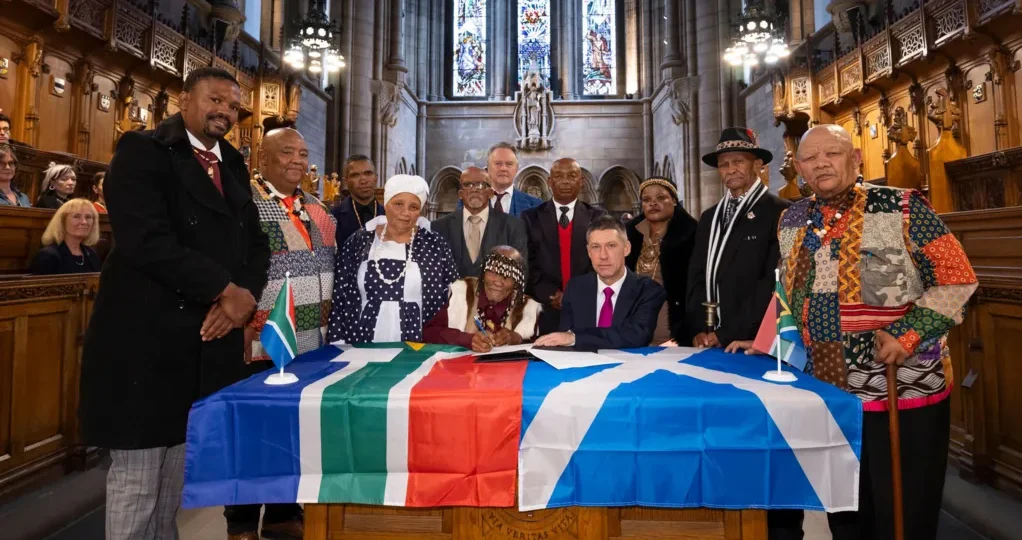
The additional remains originate from the Western Cape. They are of Khoi San origin. They were unethically excavated from within a cave and are probably considerably older than the other remains. The origin of the two face-casts is unknown. It is however, thought to have been purchased in Edinburgh.
The Northern Cape Reburial Task Team
Based in South Africa, the Northern Cape Reburial Task Team represents the first indigenous Khoi and San communities (Nama, Griekwa, Korana and San/Bushman) impacted by the historical, unethical displacement of ancestral remains. The Task team leaders are actively re-engaging and mobilising the above populations as a means of redressing the past. They also work to bring healing to people who have suffered from colonial injustices.
A repatriation ceremony
A repatriation ceremony was held at the Hunterian Museum last Monday. The Ancestral Remains arrived at Cape Town International Airport last Thursday, at 10 pm, on 16 October 2025. Upon arrival, traditional rituals were observed in accordance with the relevant cultural practices. Thereafter, led by the South African Minister of Sport, Arts and Culture, Gayton McKenzie, the motorcade proceeded to the Iziko South African Museum. The ceremony formed part of an ongoing commitment by DSAC, Iziko Museums and SAHRA to restorative justice, ethical stewardship, and dignified repatriation, return and reburials.