
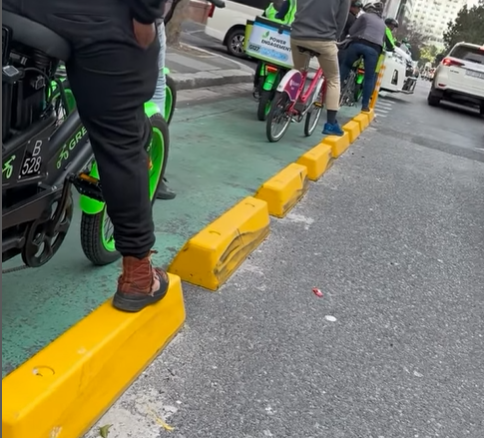
A pilot project has made Bree Street safer for cyclists, while preventing motorists from parking in the cycle lane.
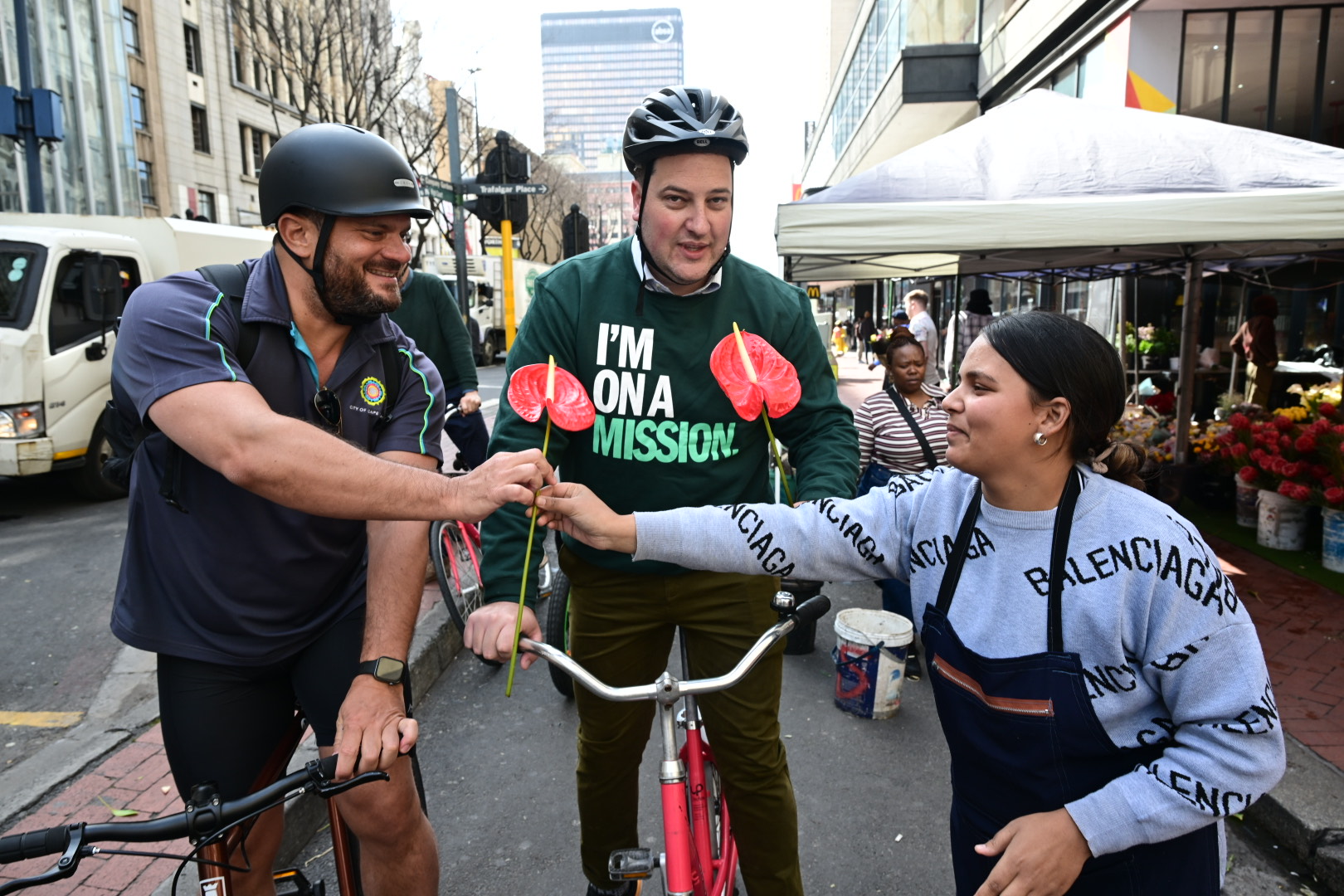
Mayor Geordin Hill-Lewis and the MMC for Urban Mobility, Rob Quintas, tested the new “Safe Passage” cycle lane late last week.
The Bree Street cycle lane now uses low-cost, removable barriers like bollards and concrete slabs to keep vehicles out, protecting cyclists from traffic and double-parked cars.
These “tactical interventions” have been implemented along Bree Street between the intersections with Shortmarket Street and Hans Strijdom Avenue.
It’s the brainchild of the Young Urbanists movement, which collaborated with the City on the project.
Quintas says if the trial works, it could be rolled out to other areas, supporting its Walking and Cycling Strategy.
“The Safe Passage pilot supports the new Walking and Cycling Strategy that was approved by the City Council in April this year, and confirms our commitment to turning strategies and policies into real change. I also want to thank the Young Urbanists and other private sector stakeholders for their support and enthusiasm in this space. Together, we are mapping a way forward to improve mobility in the CBD by putting people first.”
Hill-Lewis says he felt safe using the cycling lanes.
“It was a pleasure to test the new ways we’re making Bree Street safer for cyclists in partnership with the Young Urbanists. I’m really grateful to them for their advocacy on this. This is a first for the Inner City, and the possibilities are exciting because, if it works, we can roll it out to other cycle lanes. The pilot is an example of the City’s collaboration with stakeholders to find innovative and cost-effective solutions. Cyclists count among the most vulnerable road users, and the City is committed to turning the Inner City into a more walkable and cycling-friendly environment. The safer our streets become for pedestrians and cyclists, the more people will choose cycling over private cars.”
The safe-hit bollards and delineator kerbs protect the green cycle lane by basically creating a barrier between cyclists and vehicles.
It makes it impossible for vehicles to get into the cycle lane.
Roland Postma, Managing Director of the Young Urbanists, says they are keen to continue working with the City on this.
“We strongly believe collaboration is key to getting Cape Town moving, and we look forward to working with Urban Mobility to bring more changes to Cape Town’s streets where everyone can feel safe. This is vital to making our children feel safe on our roads and to supporting our growing economy.”
The next phase will be focusing on the cycle lane from Shortmarket Street to Hertzog Boulevard.
This phase will also address one of the biggest challenges – how to protect a cycle lane that is located next to on-street parking bays.
View this post on Instagram
View this post on Instagram