


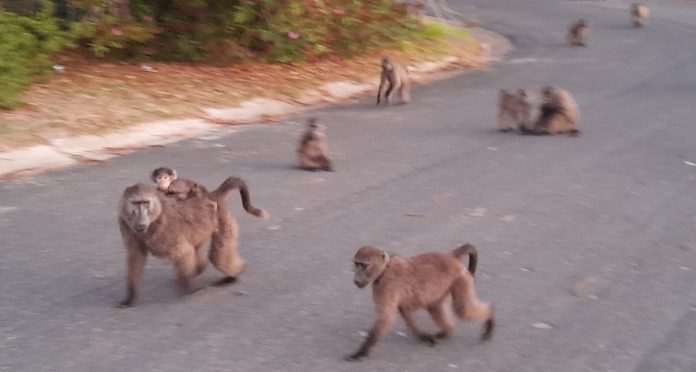
A proposed plan to remove five baboon troops from the Cape Peninsula has drawn sharp criticism from activists, following its announcement by the Cape Peninsula Baboon Management Joint Task Team (CPBMJTT).
The team, made up of representatives from SANParks, CapeNature, and the City of Cape Town, revealed the plan during a recent briefing with the Cape Peninsula Baboon Advisory Group (CPBAG).
In it is the proposed removal of five splinter troops from the Peninsula, due to their limited access to natural foraging areas and escalating conflict with urban communities.
“The basis of the plan is to put together an action plan that will give effect to having a healthy free-ranging population of boons on the peninsula as part of our collective future and to reduce the substantial human wildlife conflict that we’re experiencing at the moment,” said the City’s Gregg Oelofse
READ MORE: Second baboon found dead in Simon’s Town
Management teams say these smaller groups – namely CT1, CT2, Waterfall, Seaforth, and Da Gama4 – are difficult to monitor effectively.
The removal options under review include “translocation for rewilding, capture and removal to an existing sanctuary or to a newly established sanctuary, humane euthanasia, or a combination of these options”.
Oelofse said the proposal will be reviewed before further action is taken.
“The most important step… is in the first week of July, an international panel of experts will review that plan and provide feedback to the [Joint Task Team],” explained Oelofse.
Additional measures for consideration include the installation of baboon-proof bins by January 2026 and new fencing to limit baboon movement into residential areas.
READ MORE: Task team briefs Cape Peninsula Baboon Advisory Group on progress and way forward
The Cape Peninsula Civil Conservation (CPCC) has voiced deep concern about the proposal. According to CPCC chairperson Lynda Silk, a 2024 count of approximately 490 baboons means this plan could see up to 120 animals removed.
“To remove, most likely by killing, a quarter of the Cape Peninsula’s managed baboon population is deeply shocking. Even though we expected an announcement along these lines for some time, our community and members are reeling.”
Silk said the CPCC is particularly concerned about the ethics of such an operation.
“There are a lot of questions and serious ethical dilemmas that this raises and need to be seriously investigated,” said Silk.
She further warned of potential trauma for both the animals and the surrounding communities.
“There is no way this will not be traumatic for these highly sentient animals. It will also likely be traumatic for surrounding communities.”
Silk fears that these latest plans mark a shift toward the separation between humans and wildlife in Cape Town.
“What we are now seeing is a working plan to fully separate humans and wildlife. This is a significant change in the ethos of Cape Town.”


