


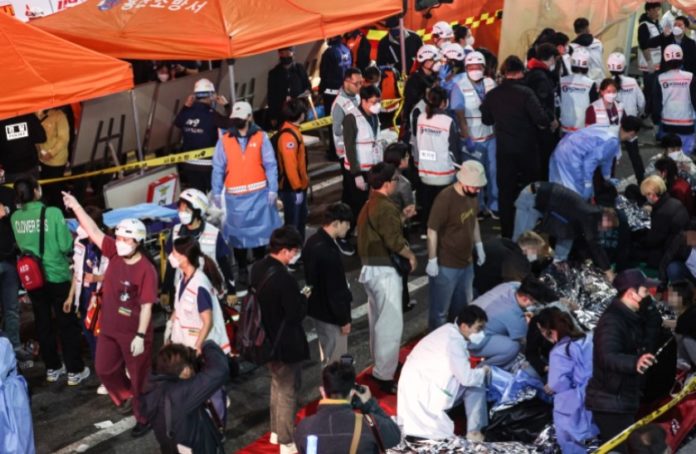
The month of October played host to several deadly stampedes and surges. The most recent tragedy occurred in South Korea’s capital, Seoul. At least 150 people were killed in a crowd crush, with many victims reportedly dying of cardiac arrest. This has been marked as one of the deadliest incidents in the country’s history.
READ MORE: Hundreds dead after disaster strikes South Korea, Somalia and India this weekend
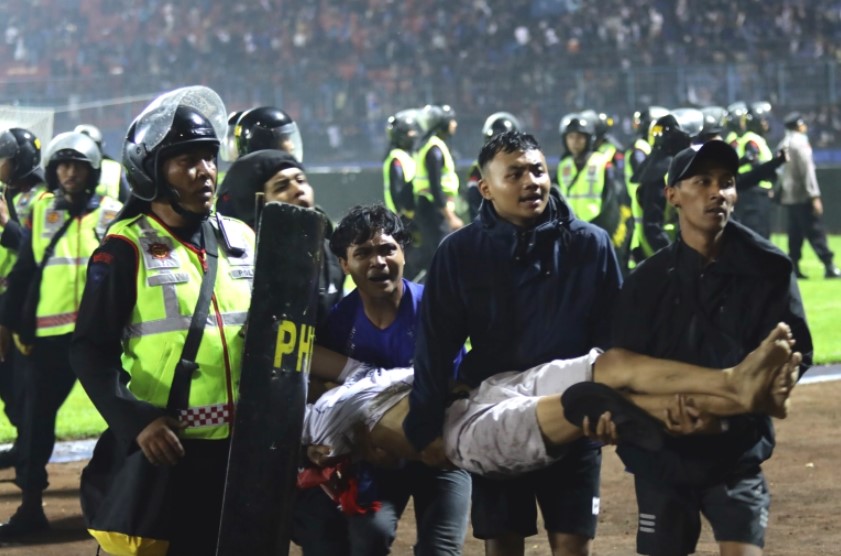
At the beginning of the month, a stadium stampede saw at least 125 people killed. Dozens were injured during the riot and stampede at an Indonesian football stadium.
At a beyond-capacity concert stadium in the Democratic Republic of the Congo – a stampede resulted in 11 people being killed. The show was headlined by African music star, Fally Ipupa.
Surge or Stampede
But what makes the tragedy in Seoul different to that in Indonesia and the DRC? According to crowd safety expert Paul Wertheimer, a crush or surge happens when people are packed together in a confined space. This leaves little space to move, and the pushing motion causes the crowd to fall over.
A stampede, on the other hand, implies that people have space to run.
Ultimately, the more people who are in the crowd, the greater the force of the crowd crush.
When crowds are uncontrollable
A visiting professor of crowd science at the University of Suffolk, Keith Still, says, “As people struggle to get up, arms and legs get twisted together. Blood supply starts to be reduced to the brain…It takes 30 seconds before you lose consciousness, and around about six minutes, you’re into compressive or restrictive asphyxia. That’s generally the attributed cause of death – not crushing, but suffocation.”
A crowd surge can be ignited in some tight situations. Like when people push others or if someone trips say Still. What is baffling, is that such events are not typically caused by people who are distressed or trying to escape something. Still says these reactions come after the crowd starts collapsing.
In Indonesia, at least 130 people died in a stadium stampede. Police fired tear gas into the stadium, some of the doors were locked, and this caused a crush at the exits.
Here we can see that a stampede implies that people have space to run, move or evade. It also occurs when a larger group of people, frightened or excited, run together in an uncontrolled way from something.
The uptick in social gatherings
Following the tight restrictions of the pandemic, people have been gathering more frequently. This has become another factor in recent crowd surges. More and more people attend events like the Halloween celebrations in South Korea. All because people have, understandably, been restricted for a long time.
Keith Still adds that the increase in mass gatherings underlines the need for better crowd management training. An aspect that faded when the pandemic hit.