


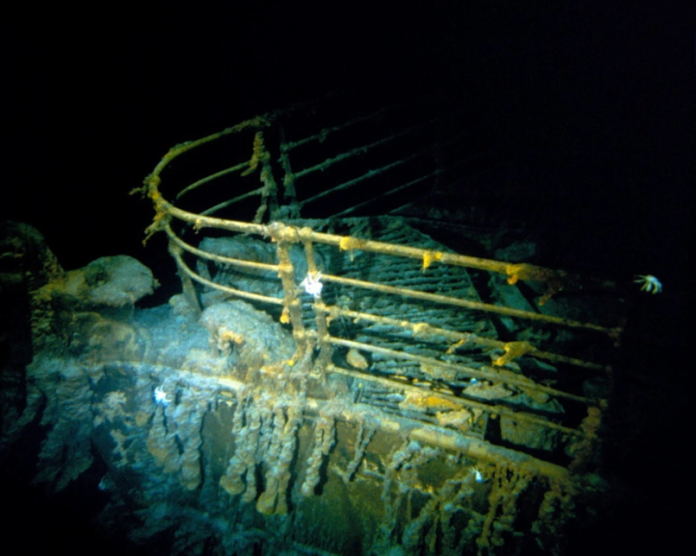
Haunting new footage of the wreckage of the RMS Titanic was released to the public. The footage was taken in 1986 during diving expeditions that gave the first glimpses of the sunken ocean liner. Notably, the footage comes seven decades after the notorious sinking.
READ MORE: Protests mar start of academic year at UCT and UWC
The Titanic, 70 years later
The footage shows the ship as explorers first saw it in 1986. The team would then return to make 11 more dives and using a submersible that could carry human passengers. They also used a small remote vessel to navigate smaller spaces.
The 80 minutes of rare unseen video comes from the Woods Hole Oceanographic Institute (WHOI) of Massachusetts. They partnered with French explorers in the discovery of the ship’s remains.
For seven decades, the Titanic remained lost and hidden below the icy ocean. On September 1, 1985, teams from the WHOI and the French National Institute of Oceanography discovered the wreckage in Canada. Its bow splits from the stern. It was buried 3780 metres below the water’s surface.
READ MORE: Warship not welcome in Cape Town waters

A blockbuster anniversary
The release commemorates the 25th anniversary and re-release of the blockbuster movie, Titanic. Its director and writer, James Cameron, is still an avid supporter of Titanic research. The film is one of only three to have won 11 Academy Awards and stars Kate Winslet and Leonardo DiCaprio.
James Cameron is also behind the 2003 documentary Ghosts of the Abyss. It captures some stunning images of the Titanic during an expedition two years prior. Cameron also funded and co-piloted a submersible built for the project.
The legacy of the RMS Titanic
The ocean liner was on its maiden voyage from Southampton (UK) in April 1912, when it hit an iceberg on the way to New York City (US). The collision was fatal. More than 1500 passengers and crew members died when the ship sank.
Recent visits to the wreak reveal signs of decay. The liner split into two main chunks while sinking.
A series of dives by Eyos Expeditions in 2019 was the first in 14 years. It showed that the wreck was heavily impacted by metal-eating bacteria and natural salt corrosion. The Eyos founder, Rob McCallum said:
Diving on the Titanic is a complex and difficult undertaking. The logistics of working at 12,500ft while 370 miles offshore are challenging
The wreck remains, according to McCallum, one of the most ‘iconic and exclusive’ destinations on the planet.
READ MORE: Rapper AKA shot dead in Durban