



Playing games and interacting with preschoolers could help to improve the mental well-being and mood of older people in retirement homes. This is according to a new study conducted by Stellenbosch University.
Researchers, Dr. Elizabeth Earl and Dr. Debbie Marais from the Faculty of Medicine and Health Sciences published the study recently in the peer-reviewed journal PLoS ONE. Dr. Earl is currently doing her Community Service year at the Shongwe Hospital in Mpumalanga.
According to the study, people living in semi-independent and frail care residential units at retirement homes may experience the loss of the supportive role provided by their communities. These individuals may also suffer from anxiety and depression.
“It is, therefore, important to explore how interactions with children may improve their situation” – Dr. Elizabeth Earl
Residents at a retirement home connected to a preschool were asked to complete a questionnaire relating to mental health. Residents were interviewed about their interactions with the preschoolers.
READ MORE: The four Bs that help kids bond with their grandparents
Scheduled interactions with the pre-schoolers
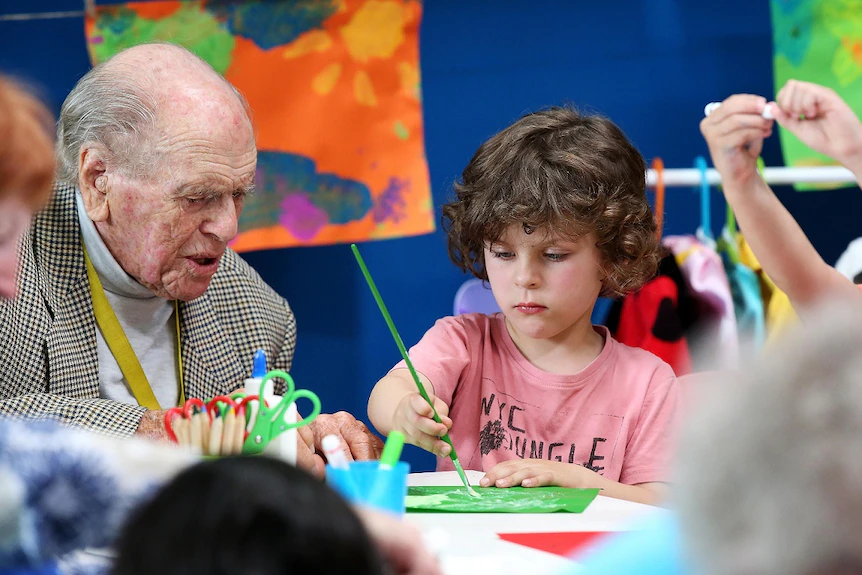
These interactions happen twice a week, where the children join the older people for a supervised 60-minute session of playing interactive games such as passing a ball to each other or building puzzles. Residents can also choose to do additional volunteer work with the children. The children also do additional activities with the home on special occasions, such as singing songs with them on public holidays.
“By forming relationships with the children, older people felt connected to a community and developed a sense of belonging in society, which in turn influenced their well-being at the home.”
They re-identified with roles, which gave them a sense of purpose. The elderly valued their contribution to the lives of the children. They also valued the individual relationship with the children, as they felt important through being remembered.
According to the researchers, the intergenerational interactions brought back fond memories. This evoked a sense of playfulness that helped to improve the mood of the older people.
In conclusion, activities organised for the interactions should allow for reciprocal engagement. It should also facilitate educational or skills-based development to promote a sense of purpose in older persons through these interactions.


